A second-generation peacekeeper in MINURSO
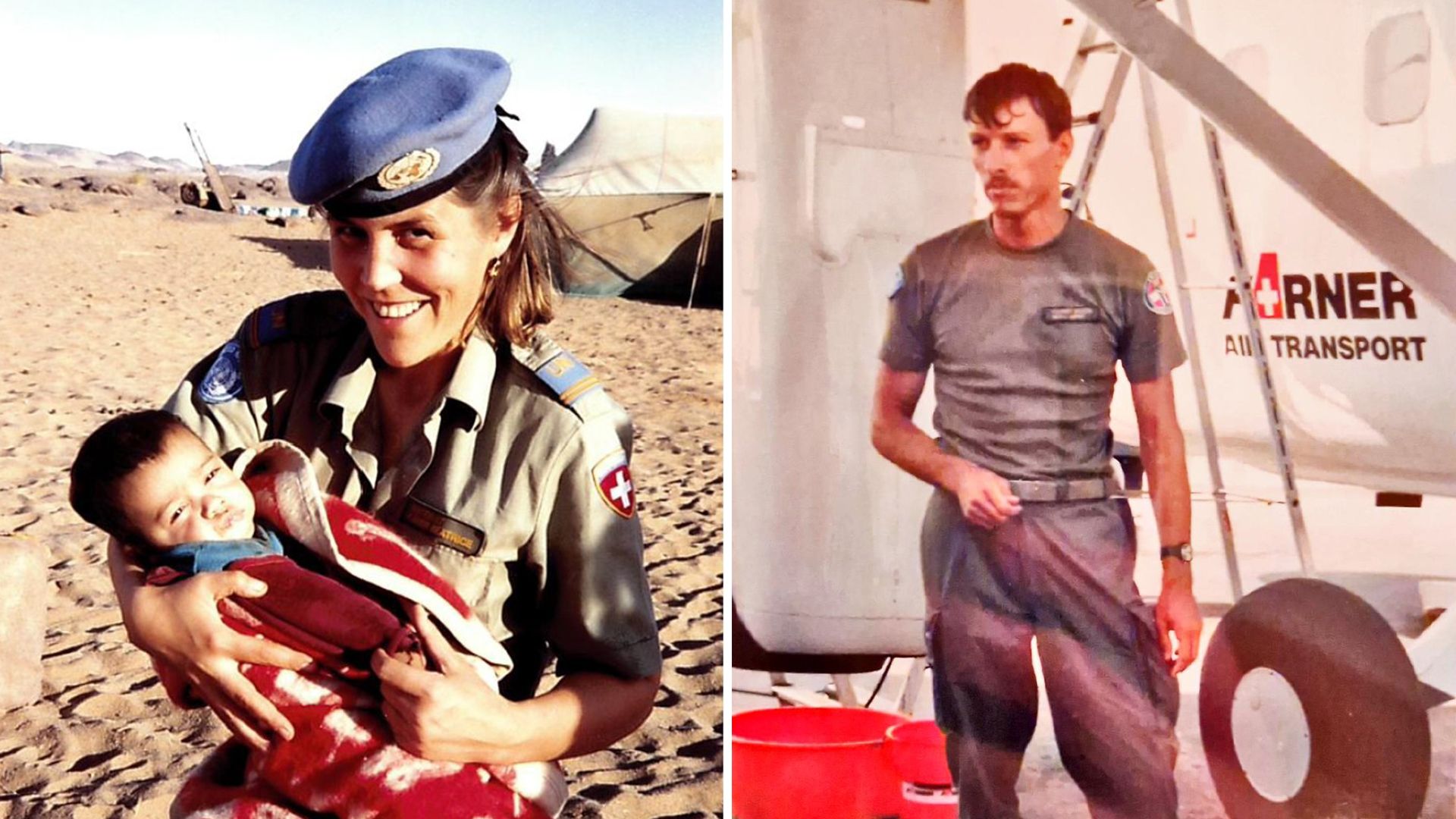
In 1991, the Swiss Armed Forces sent a Swiss Medical Unit (SMU) to Western Sahara in favour of the UN mission MINURSO. My parents were part of the mission, where they got to know each other and served for two years. 33 years after their deployment began, I am now serving as a military observer in the same mission.
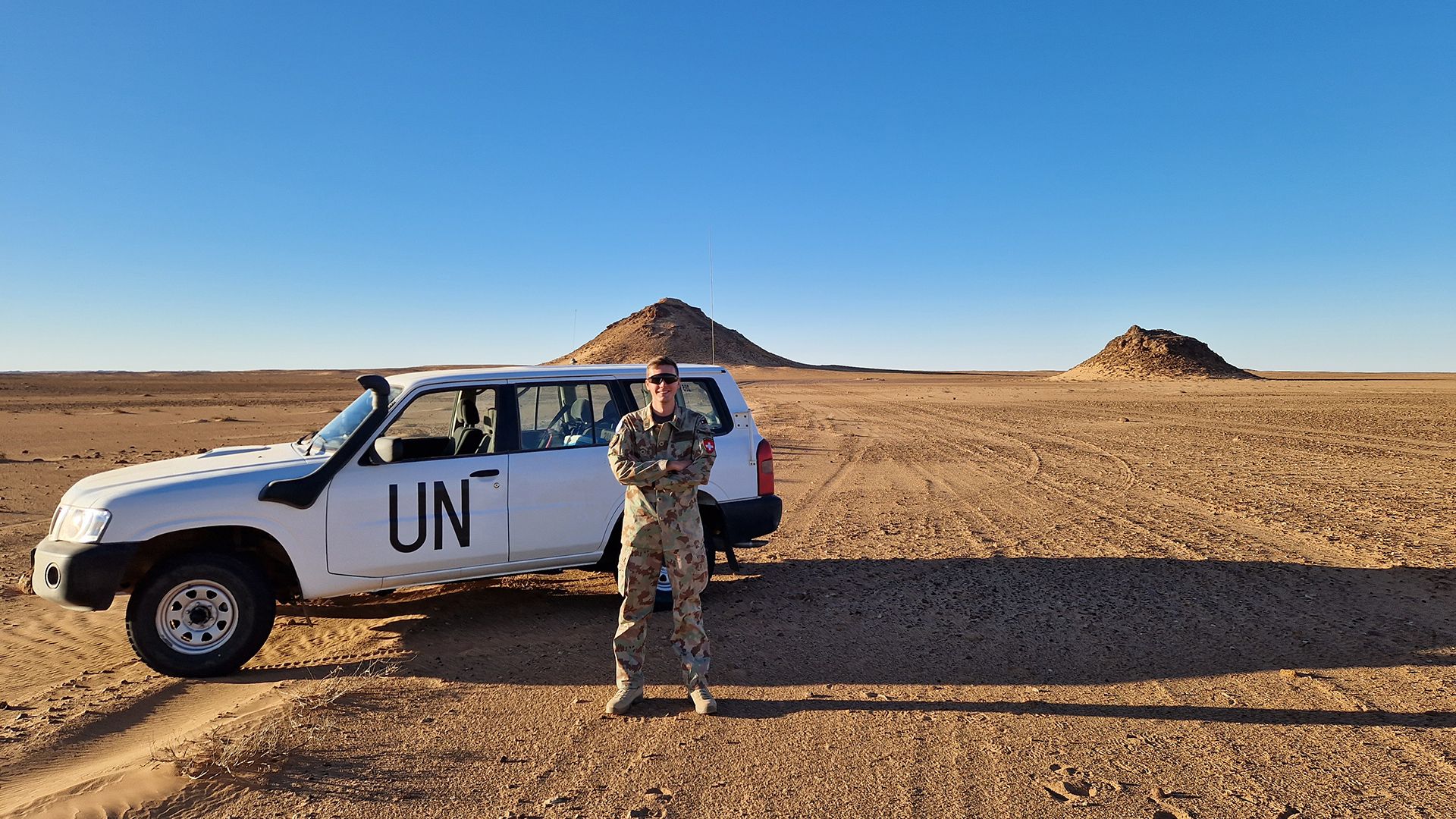
A report by captain Guido Haefeli, MINURSO military observer
«Yes, I am the one whose parents were once here». It’s a phrase I frequently use here in Western Sahara. With just over 200 military observers, MINURSO is a small UN mission and word of my family history has spread quickly. But let’s start at the beginning.
In 1991, the Swiss Armed Forces deployed the «Swiss Medical Unit» (SMU) with up to 85 men and women to Western Sahara to provide medical care within the UN mission MINURSO. My parents were part of the first SMU contingent: my mother was deployed as an intensive care nurse, while my father flew the «Twin Otter» propeller aircraft as a transport pilot. They didn’t come to Western Sahara as a couple, but rather met during the mission.
Peacekeeper mission shaped my parents
When my parents signed up for the peacekeeping mission in Western Sahara in 1991, they were told that the mission would last six months. The UN troops were to monitor the ceasefire between the Moroccan army and the Frente POLISARIO, which was campaigning for the independence of Western Sahara. Meanwhile, the civilian component of the mission was supposed to organise the referendum in Western Sahara. However, the referendum has still not been held – 33 years after the start of MINURSO.
As a result, my parents’ assignment was extended from the original six months to two years. It was an experience that shaped both. As a child, I often heard stories about their time in Western Sahara. My mother told me about the impoverished living conditions of the local Sahrawi people, about the many children with eye problems caused by the desert sand and about the UN soldiers who were seriously injured by landmines. My father told me about the miserable conditions in the Sahrawi refugee camps in Tindouf, Algeria, about the extreme heat and how the desert sand affected the propeller plane. Both are still gnawing at the loss of two of their compatriots: a Swiss nurse died in a road accident in Western Sahara in 1992 and a Swiss pilot died at the controls of his Pilatus PC-6 when the plane crashed in Western Sahara in 1993. In August 1993, the Swiss Armed Forces ended their involvement and withdrew the SMU from MINURSO but rejoined the mission with military observers in 2014.
Military observer assignment was my goal
My parents’ deployment in Western Sahara also impacted me and sparked my desire to take part in a UN mission to promote peace. When I entered basic training for recruits at the age of 19, I had one goal in mind: to become an officer and later go to Western Sahara as a UN military observer. As it turns out, I was to achieve this goal. After earning my stripes as platoon leader, I completed my journalism degree at the Zurich University of Applied Sciences, served in SWISSCOY in Kosovo and then did a one-year internship at the Swiss embassy in India as part of my university studies. Finally, last summer, the time had arrived: I completed the UN military observer course SUNMOC at the Swiss Armed Forces International Command SWISSINT and flew to Western Sahara at the end of September 2023 at the age of 25.
On patrol in the Western Sahara
As a military observer, I am currently based on the side occupied by Morocco. The Western Sahara region is divided by the 2700 km long Moroccan sand and mine wall «Berm». The much larger part lies to the west of the «Berm» and is controlled by Morocco. The areas to the east of the «Berm» are under the control of the Frente POLISARIO.
I am stationed on a team site with around 20 other military observers. The area we are responsible for is larger than Switzerland. On our patrols, we visit the Moroccan units at the «Berm» and verify their troop and material strength. When my parents served in Western Sahara, the ceasefire was intact and stable. Today this is no longer the case. In November 2020, the Frente POLISARIO cancelled the ceasefire. In their view, the Sahrawis had already been waiting in vain for 29 years for a referendum to be held. The Sahrawis accuse the international community of indifference. As a result, fighting is a recurring occurrence in Western Sahara.
A sustainable and peaceful solution to the conflict remains out of sight during my second-generation deployment in MINURSO, a full 33 years after my parents began their deployment. Hopefully, there will be no need for a third generation of my family to serve in Western Sahara.